
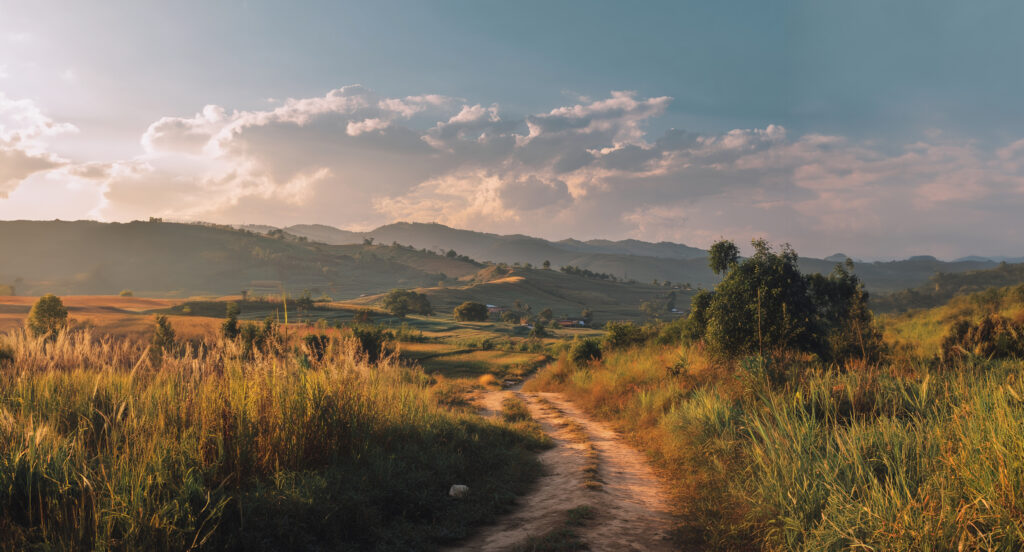
Travel slowly and enjoy every step.
Routes, experiences and Camino de Santiago.
Discover places that feel right for you, with tailor-made getaways to destinations you'll never forget. We offer personalised itineraries, blending nature, history, culture, food and wine to perfection. All you have to do is sit back and enjoy.
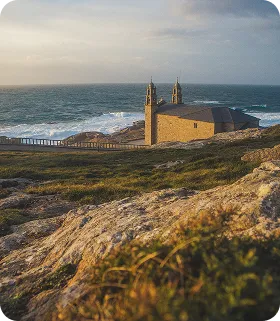
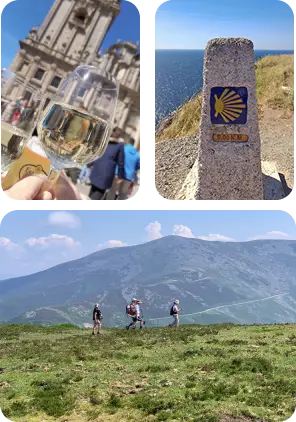
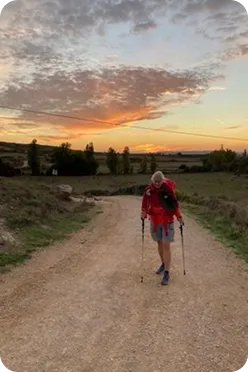
Highlighted Experiences
Why Rutas Meigas
We have almost 30 years experience in designing and organising routes for individual travellers and groups of all sizes. As an online wholesale retailer (XG-500), we also provide services to domestic and foreign travel agencies for their end customers, as well as to companies wishing to organise business trips, conferences and meetings.
Everything about the Camino de Santiago
More than 30 routes and
small trips around Galicia
Experiences for
all audiences
Tailor-made
organization
Commitment to
the environment
Save time and keep things simple
Camino de Santiago with support
Looking for an exclusive, worry-free experience?
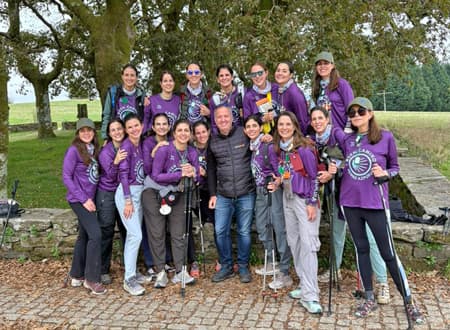
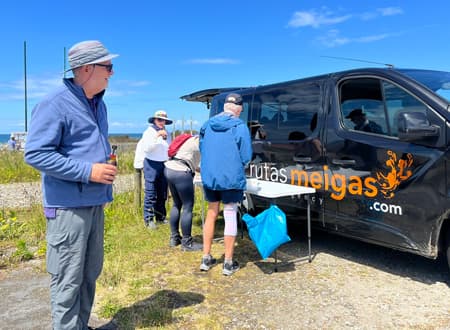
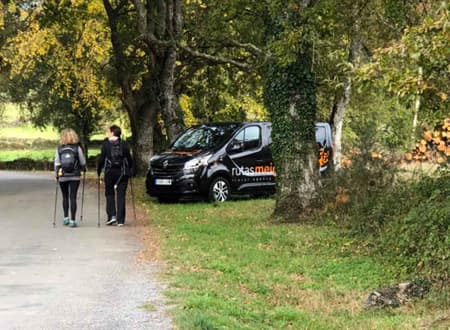
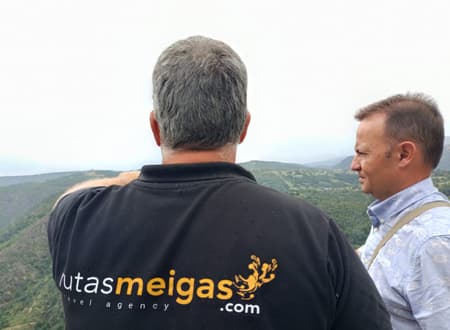
This exclusive service is designed for those who want to enjoy the Camino de Santiago with maximum comfort, safety and attention to detail. It is a different way to experience the pilgrimage, where all you have to do is focus on living in the moment. Our team at Rutas Meigas will take care of everything else.
Our Caminos
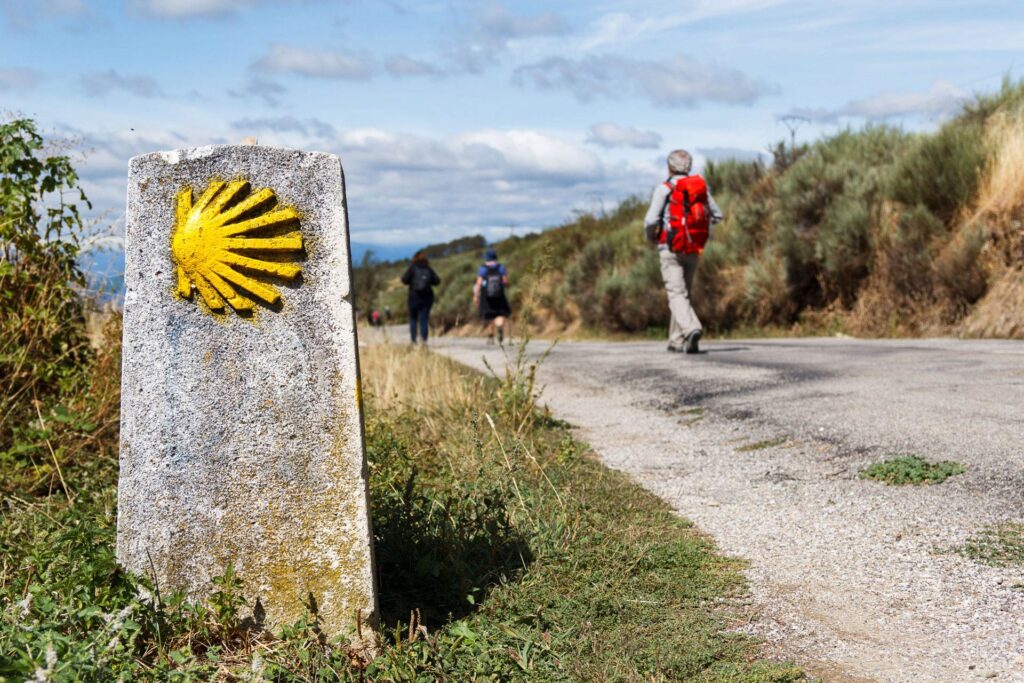
That said, there are also many established variants of the Camino de Santiago, and these are the ones chosen by the vast majority of pilgrims. Here you can take a look at the main variants of the Camino de Santiago, organized by Rutas Meigas. If you are still looking for something different or would like to customize your route, feel free to contact us.
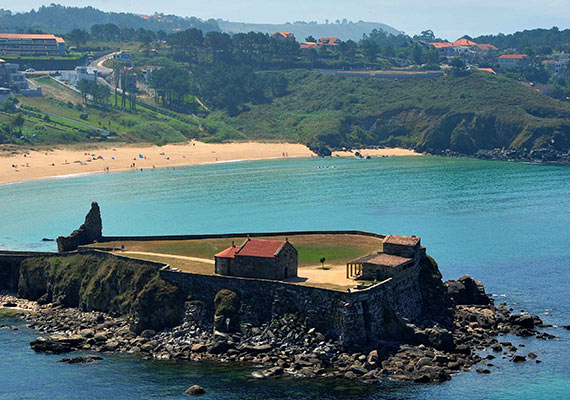


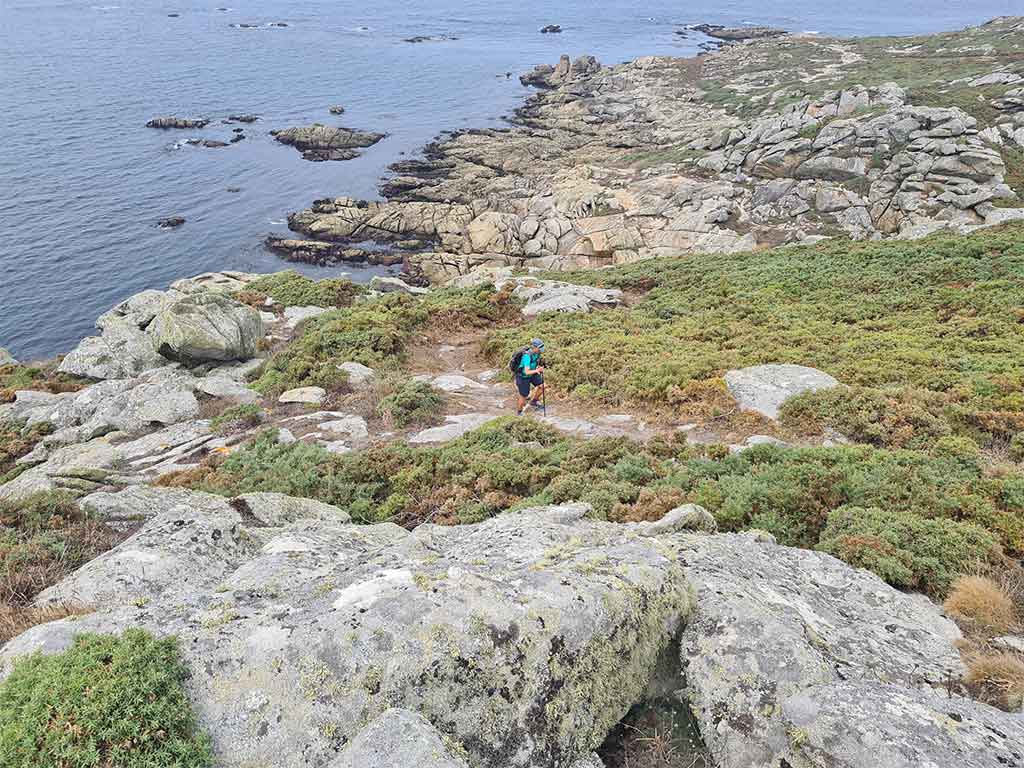
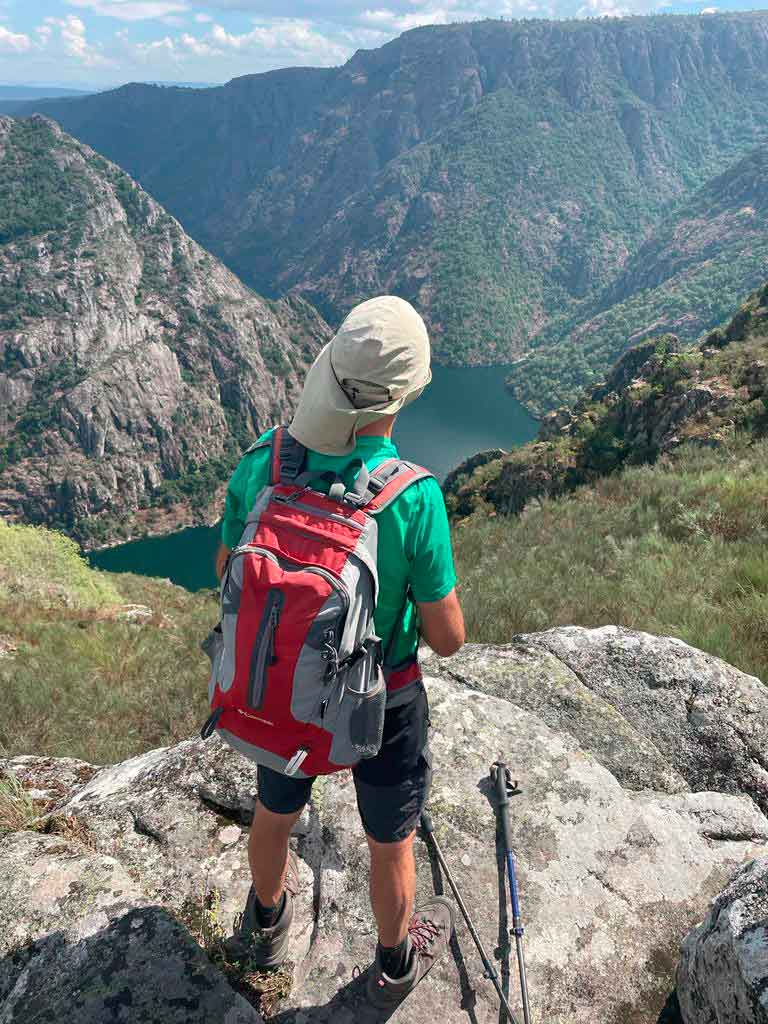
Trekking and Hiking
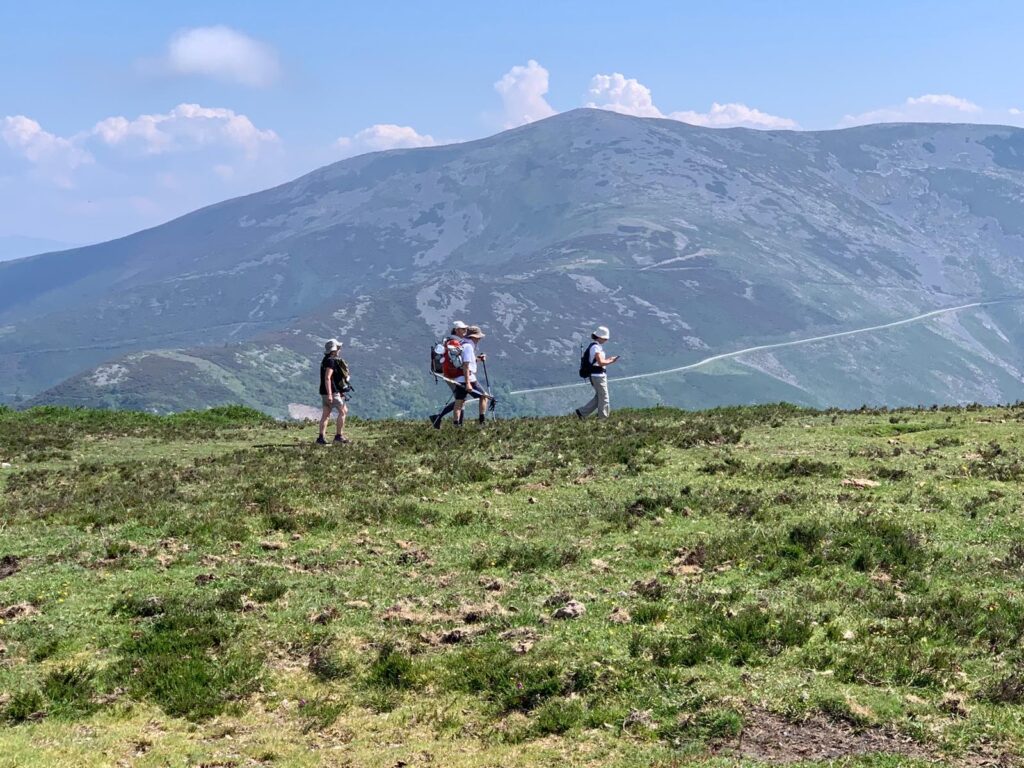
Our organized hiking routes are designed for those who want to enjoy the experience at their own pace, with the peace of mind that everything is taken care of.
Carefully selected itineraries through stunning landscapes and detailed planning so your only concern is to enjoy every step.
Camino de Santiago and many other experiences with Rutas Meigas
As a retail and wholesale travel agency, we offer services both to end customers and to other travel agencies. We also organize business trips, incentives, conferences, and meetings.
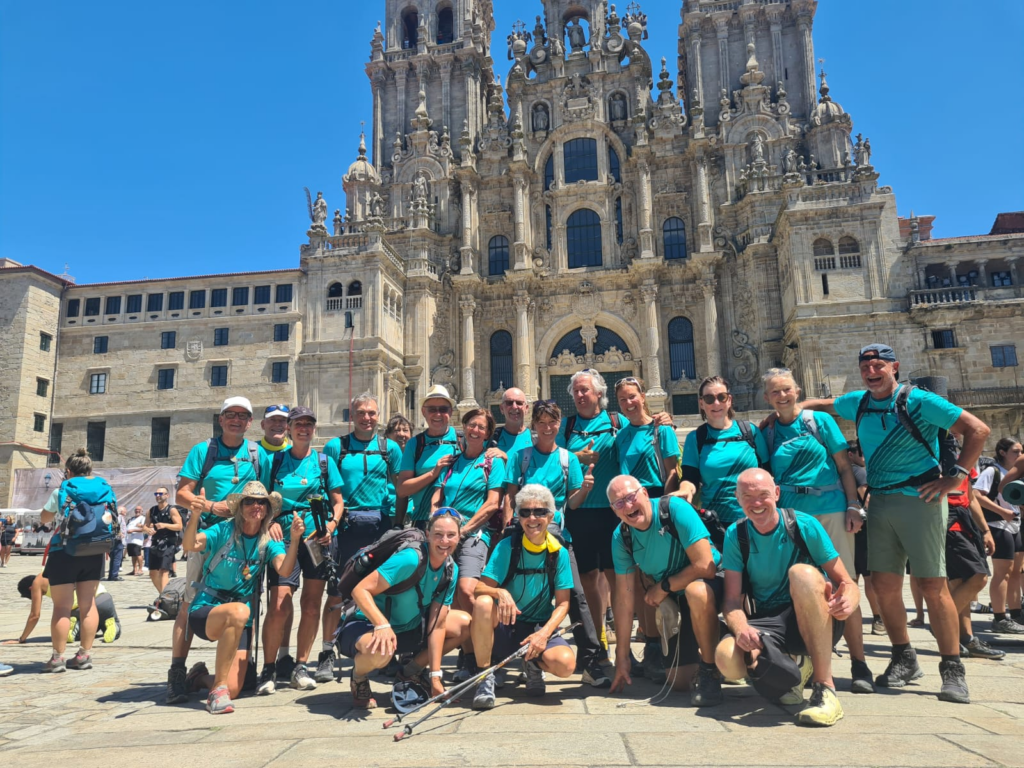
The best stories of the Camino and other routes
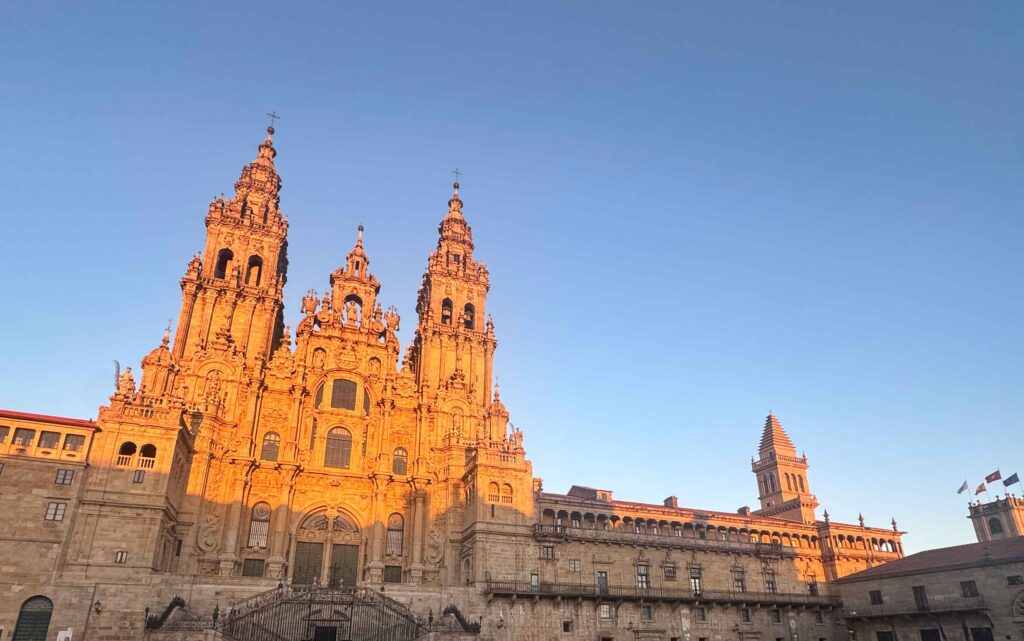
Holy Year 2027 in Santiago de Compostela
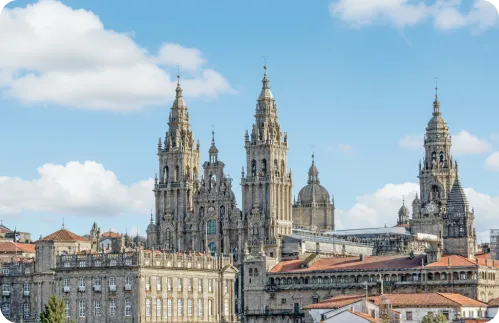
The Holy Year 2027 in Santiago de Compostela will begin on December 31, 2026, with the opening of the Holy Door of the Cathedral, at noon this time, and will end on December 31, 2027. It is a Compostela Holy Year (also known as a Jacobean Holy Year) because July 25, 2027, the feast day of Saint James the Apostle, falls on a Sunday. During the Jubilee Year, pilgrims who complete the Camino de Santiago (a minimum of 100 km / 62 miles on foot, or 200 km / 124 miles by bike) can earn the Compostela certificate and, by meeting the Church’s requirements, also the plenary indulgence. The Camino enters 2027 after a record 530,987 Compostelas in 2025 (a number that will be surpassed in 2026). The next Holy Year will come five years later, in 2032.The Holy Door: it opens only during Holy Years and is walled up the rest of the time. Walking through it is the symbolic gesture of the Jubilee.
We are less than 100 days away from Holy Year 2027, and in Santiago de Compostela you can already feel the atmosphere of preparation that comes before great events. At Rutas Meigas, we have spent years accompanying pilgrims from all over the world on their Camino de Santiago, and for no one is a Holy Year just another year. It is the year the Holy Door opens, the year the Berenguela Tower is lit up, the year the Camino fills with excitement, and the year many people finally decide to lace up their boots. If you’re thinking of doing it in 2027, now is the time to start planning.
When Does Holy Year 2027 start and end?
The 2027 Compostela Holy Year will begin on December 31, 2026, with the opening ceremony of the Holy Door of the Cathedral of Santiago, and will close exactly one year later, on December 31, 2027, when the door is sealed again until the next Jubilee. Between those two dates, the Holy Door will stay open all 365 days.
The Holy Door of the Cathedral of Santiago will open at Noon
The big news for this Xacobeo 2027 is the time. The ceremony has traditionally been held in the mid-afternoon of December 31, but the Church of Compostela has announced that this time it will take place at noon, about five hours earlier than usual. The Archbishop of Santiago, Francisco José Prieto, will strike the Holy Door, located on Quintana Square, three times with a hammer, and the Cathedral’s dean has explained that an effort will be made to bring back the sound of the ancient jubilee horn, which, according to biblical tradition, was used to announce jubilee years.
The motto of Holy Year 2027
Every Holy Year has its motto, and the one for 2027 is “_When they saw the star, they were overjoyed_.” The star, so closely tied to the tradition of the “field of stars” on which Compostela was built, symbolizes guidance, encounter, and the joy of reaching the goal after a long journey. It’s hard to find a better image for how we feel on arriving at Obradoiro Square.
Why 2027 is a Compostela Holy Year
As we mentioned in our post about Saint James’s Day, a Holy Year is declared when the feast of Saint James, July 25, falls on a Sunday. And in 2027, July 25 will be a Sunday. This privilege, granted by Pope Callixtus II in 1122 and confirmed by Alexander III in 1178, is shared only by Santiago de Compostela, Rome and Jerusalem.
Because of how the calendar works, Compostela Holy Years follow a pattern of 6, 5, 6 and 11 years. The last one was Holy Year 2021-2022, the first double Holy Year in history, extended by Pope Francis because of the pandemic and still lived with face masks, social distancing and without the traditional hug of the Apostle. That is why so many people are eager for a Jubilee Year without restrictions. After 2027, we will have to wait until 2032.
What changes during the Holy Year: the Holy Door, the Berenguela Tower and the Plenary Indulgence
For anyone walking to Santiago de Compostela in a Holy Year, there are several things worth knowing:
- The Holy Door: it opens only during Holy Years and is walled up the rest of the time. Walking through it is the symbolic gesture of the Jubilee.
- The Berenguela Tower, beacon for pilgrims: during Holy Years, the Berenguela tower, which is also the clock tower, stays lit day and night to show pilgrims the way to the Apostle Saint James.
- The plenary indulgence: it is the spiritual benefit unique to the Holy Year.
The Plenary Indulgence in Santiago de Compostela
The plenary indulgence is, for many believers, the ultimate reason for their pilgrimage: the full remission of the temporal punishment due to sins that have already been confessed.
The Cathedral’s dean has asked that we not forget that 2027 is, above all, a religious jubilee. The usual requirements include confession, communion, prayer for the Pope’s intentions, and a visit to the Cathedral, entering through the Holy Door.
The Camino de Santiago arrives at Holy Year 2027 at its Best
If the data shows anything, it’s that the Camino de Santiago doesn’t need a Holy Year to attract more and more pilgrims. In 2025, the Pilgrim’s Office issued 530,987 Compostelas, 6% more than the previous year and an all-time record. To put that in perspective, Holy Year 2022 closed with about 438,300 Compostelas, a number that has already been surpassed even in an ordinary year.
That doesn’t mean 2027 will be just another year. The Holy Year adds the appeal of the Jubilee, the opening of the Holy Door and the cultural program of Xacobeo 2027, and everything points to hundreds of thousands of people visiting Compostela throughout the year. In fact, the biggest concern of the Church of Compostela is hospitality: how to welcome so many people well and how to ease congestion around the Cathedral.
How to Prepare for Your Camino de Santiago in Holy Year 2027
With the crowds expected, the key is to plan ahead.
- Book your accommodation on the Camino early. On the busiest stages and during the highest-demand weeks, beds sell out sooner.
- Choose the date of your Camino de Santiago carefully. Dates around July 25 will be the most crowded. Spring and fall tend to offer more peace and quiet and better weather for walking.
- Consider other variants of the Camino de Santiago. Besides the Camino Francés (French Way), there are Jacobean routes that let you experience the Holy Year with fewer crowds.
- Stay calm, respectful and patient when you arrive in Santiago. There may be longer waits at the Pilgrim’s Office and at the entrances to the Cathedral, so it’s best to arrive without rushing. Respect the flow of people, especially the city’s residents, who will keep going about their daily lives.
Buen Camino!
Want to reach Compostela in Holy Year 2027? Rutas Meigas takes care of everything for you. Contact us
Frequently Asked Questions about Holy Year 2027
When does Holy Year 2027 start and end?
Holy Year 2027 begins on December 31, 2026, with the solemn opening of the Holy Door of the Cathedral of Santiago de Compostela, scheduled for noon this year, and ends on December 31, 2027, when the door is closed again.
Why is 2027 a Compostela Holy Year?
Because July 25, 2027, the feast day of Saint James the Apostle, falls on a Sunday. When that happens, a Compostela Holy Year is declared, a privilege the Church grants only to Santiago de Compostela, Rome and Jerusalem. The next one will be in 2032.
What do I need to get the Compostela in a Holy Year?
The same requirements as in any other year: walk at least the last 100 kilometers (62 miles) on foot or on horseback, or 200 kilometers (124 miles) by bike, carry a stamped pilgrim credential, and request the Compostela at the Pilgrim’s Office. The plenary indulgence is a separate spiritual benefit and has its own conditions.
Do I have to walk through the Holy Door to receive the plenary indulgence?
Entering through the Holy Door is one of the requirements set out by the Cathedral, along with confession, communion and prayer for the Pope’s intentions. Walking through it alone does not automatically grant the indulgence. If this applies to you, we recommend confirming the details with the Cathedral itself.
Will there be more pilgrims in Holy Year 2027?
It’s very likely that turnout will be high: the Camino already broke its record in 2025 with 530,987 Compostelas, and the Holy Year adds extra appeal. That’s why we recommend booking early, especially if you want to travel in summer or around July 25.
Rutas Meigas | Camino de Santiago Travel Agency, Routes and Hiking in Galicia | rutasmeigas.com
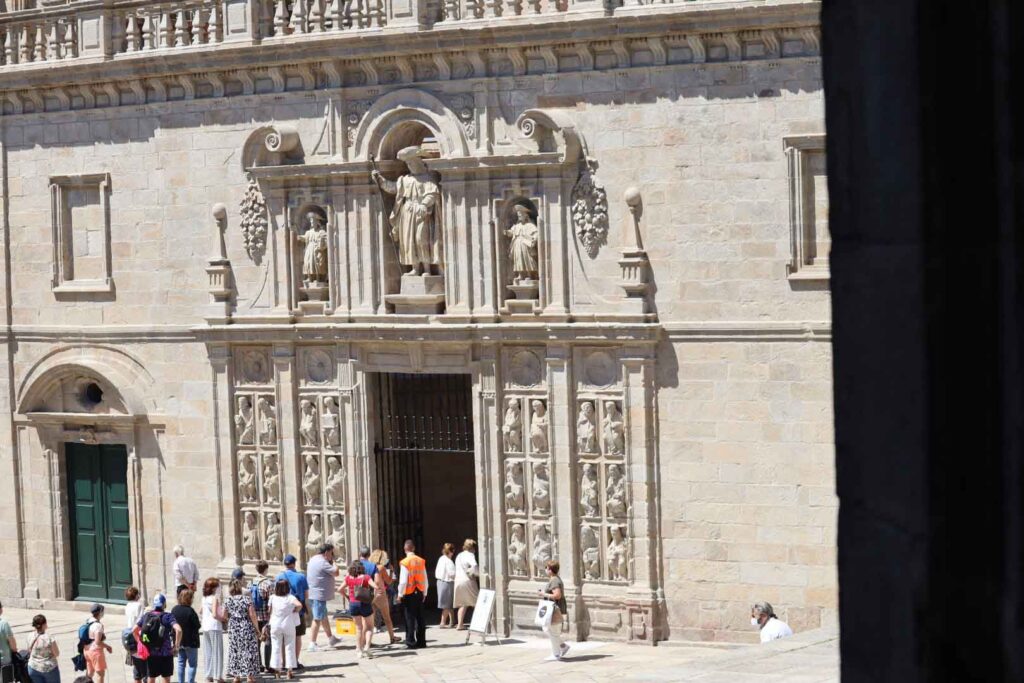
The Holy Door of Santiago Cathedral
The Holy Door of the Cathedral of Santiago, also known as the Door of Forgiveness, is located on Quintana Square and opens only during the Compostela Holy Year, when July 25 falls on a Sunday. Its exact origin is uncertain and is placed around the 16th century. Its current façade is Baroque and reuses some of the sculptures from Master Mateo’s Romanesque stone choir. The opening ritual takes place on December 31. The Archbishop of Santiago strikes the door three times with a silver hammer, a symbolic gesture that recalls the time when the door was walled up. In 2027, the opening ceremony will be at noon on December 31, 2026. Walking through it is one of the requirements for receiving the plenary indulgence. Rutas Meigas organizes the Camino de Santiago so you can cross the Holy Door while enjoying the whole route to the fullest.
Normally, the pilgrims who walk to Santiago each year carry in their minds the desire to reach Obradoiro Square (Praza do Obradoiro) and see the imposing Baroque façade of the Cathedral. That is always the case, except in Holy Years, when the busiest square is Quintana. That is where the Holy Door stands, and from it 27 figures (12 on each side and 3 at the top) wait for the pilgrims. But this entrance hides much more.
A Holy Door not so big for an enormous promise
Holy doors are almost never the grand main doors of a church. They tend to be side entrances, narrow, almost humble. That is no coincidence. They evoke the “narrow gate” of the Gospel and remind pilgrims that the path of forgiveness is walked with humility, not with pomp or fanfare.
The Holy Door of Santiago de Compostela opens at the east end of the Cathedral, between the chapels of the Savior and Saint Peter, and leads into the ambulatory. That location has its charm. Whoever crosses it ends up a few steps from the high altar, the crypt of the Apostle and the medieval statue that pilgrims traditionally embrace. It is the most direct shortcut into the church, reserved exclusively for Holy Years.
The Holy Door of the Cathedral of Santiago and its origins shrouded in Mystery
If you were expecting an exact birth date, we’re sorry to disappoint you. No one knows for certain when or how the Holy Door came to be. What exist are two accounts that have competed for centuries, and we’re going to tell you both.
The Medieval Hypothesis: the Monks’ Door
According to the first hypothesis, the door would be the heir of a much older one, a minor entrance to the church that preceded the current Cathedral, which made it easier for the monks of San Paio, guardians of the Apostle’s tomb for centuries, to pass through. Some even trace it back to the pre-Romanesque church of the 11th century. The problem is that no evidence has survived to confirm it.
The Roman Hypothesis: Alexander VI and Archbishop Fonseca
The second hypothesis, the stronger one according to scholars, tells a different story. In the Rome Holy Year of 1500, Pope Alexander VI set the ritual of the holy doors: a blow of the hammer, a wall that falls, the pontiff crossing first. The idea caught on. Compostela, proud to be the world’s second jubilee city and always attentive to what was done in Rome, was quick to adopt it. Historians point to Archbishop Alonso III de Fonseca, during whose tenure the jubilees of 1507, 1512 and 1518 were celebrated, as the man who would have given the door its present meaning.
The Roman gesture, by the way, had already stirred popular fervor half a century earlier. A Florentine merchant wrote that, after the door of Saint Peter’s was opened in 1450, the faithful gathered the rubble from the wall to take home as relics. A custom that, according to specialists, also found an echo in Santiago.
A Baroque Façade built from the pieces of a lost treasure
What we do know for certain is that the door’s current appearance is Baroque, and that its history is tied to a great loss. Until the early 17th century, the center of the Cathedral housed the stone choir of Master Mateo, the Romanesque work of the same genius who sculpted the Portico of Glory. When it was dismantled, some parts were lost and some of its sculptures were reused.
In 1611, the master builders Jácome Fernández and González de Araújo transformed the façade and placed twelve figures of biblical characters, six on each side, from that choir. Around 1660, José Peña de Toro doubled the number, to twenty-four. And in 1694 the local sculptor Pedro del Campo crowned the ensemble with Saint James the Pilgrim and his disciples Theodore and Athanasius, also dressed as pilgrims. That is how the famous “twenty-seven of the Holy Door” came to be. In 1744, the iron grille that completes the exterior today was added.
Between the door itself and the Baroque portico, a small vestibule remained where a sepulcher and a few gravestones are still preserved. They are a reminder of another time, when the Quintana was a cemetery.
The Neoclassical Holy Door that never was
In 1794, Archbishop Malvar promoted a major neoclassical renovation of the Quintana and the east end of the Cathedral, including a large-scale Holy Door. The prelate’s death a year later, along with the cost of the project, put an end to the idea. Today we can only be grateful, since the humble door we know preserves the intimate character that its symbolism calls for.
December 31: the ritual of Opening the Holy Door
On December 31 before a Holy Year, the Quintana fills with pilgrims, faithful and church authorities. A procession led by the archbishop approaches the door.
The culminating moment arrives. The archbishop takes the silver hammer, strikes three times and is the first to cross the threshold. The Holy Door will stay open until the following December 31, when a similar ritual will close it until the next Jubilee.
For Holy Year 2027, the ceremony will take place on December 31, 2026, and this year it has been moved up to noon.
The Holy Door, from Leiro to Suso León’s Bronze
Outside of the Holy Year, the Holy Door stays closed by a door on its inner face and an outer grille. The inner door is made up of two bronze leaves, the work of Suso León, installed in 2003. Their reliefs tell the story of the life, martyrdom and translation of the Apostle Saint James. Before them, a wooden windbreak carved by Francisco Leiro in 1992, on the theme of the _Translatio_, occupied the spot, and it is now kept in the Cathedral Museum.
And sometimes the rule has been broken with the Church’s permission. In 2016, Pope Francis declared the extraordinary Jubilee of Mercy, and the Cathedral decided to open the door exceptionally during that year. Likewise, years later, it decided to extend the last Holy Year, 2021 to 2022, because of the coronavirus pandemic.
The hidden details of the Holy Door
If you ever cross the Holy Door of the Cathedral of Santiago, look out for these little secrets:
- The cross on the doorjamb: many pilgrims brush their fingertips against a small cross carved into the frame and then make the sign of the cross with water from the fonts.
- The two figures inside: Ezekiel and Saint Jude Thaddeus, both from Master Mateo’s choir.
- The Latin inscription: it recalls that this place is “the house of God and the gate of heaven,” a quotation from Genesis.
- The consecration cross of 1211: a testimony to the first consecration of the Cathedral, above the door.
- The stained-glass window of Saint James the Pilgrim (1896), which crowns the whole.
The Holy Door faces east and, therefore, toward Jerusalem, the place the Apostle Saint James departed from in the 1st century to preach the word of God.
What it means to cross the Holy Door
Behind so much stone and so much ritual lies a very simple idea, that of the words of the Gospel of John: “I am the gate; whoever enters through me will be saved.” Crossing a holy door is a rite of passage, leaving the old behind and starting something new. For the pilgrim who arrives on foot, it is the physical and spiritual culmination of the Camino de Santiago.
That said, it’s best not to confuse the symbol with grace. The Church reminds us that the jubilee is not earned simply by passing through the door, since the plenary indulgence requires meeting the conditions set for each Holy Year, which include, at a minimum, the confession of sins.
Reach the Holy Door by walking the Camino with Rutas Meigas
Although making a pilgrimage is not an essential requirement for obtaining the plenary indulgence, crossing the Holy Door after walking the Camino de Santiago is one of those unforgettable experiences.
At Rutas Meigas, a travel agency based in Santiago de Compostela, we take care of the accommodation, the luggage transfer between stages, and everything you need for your pilgrimage. With Holy Year 2027 approaching, it’s best to plan ahead.
Want to cross the Holy Door in Holy Year 2027? Rutas Meigas takes care of everything for you. Contact us
Buen Camino!
Frequently Asked Questions About the Holy Door of the Cathedral of Santiago
Can I cross the Holy Door when it’s not a Holy Year?
No. Outside the Jubilee Year, the door stays closed by an inner door and an outer grille. It opens only in Compostela Holy Years, when July 25 falls on a Sunday, although the Pope may declare extraordinary holy years, as happened in 2016 and 2022.
When will the Holy Door open for Holy Year 2027?
On December 31, 2026, with a ceremony presided over by the Archbishop of Santiago that will be held at noon this year. The door will close on December 31, 2027.
Who made the figures of the Holy Door?
Most come from the old stone choir of Master Mateo, reused in the 17th century. The figures of Saint James the Pilgrim, Theodore and Athanasius are the work of the local sculptor Pedro del Campo (around 1694). Together they make up the so-called “twenty-seven of the Holy Door.”
Is the current Holy Door the original from the 16th century?
Not quite. Its origin dates back, in all likelihood, to the 16th century, but its exterior appearance is Baroque (17th century) and the current bronze leaves date from 2003, the work of Suso León.
Do I have to cross the Holy Door to receive the plenary indulgence?
Crossing it is the most symbolic gesture of the Holy Year, but the Church reminds us that the jubilee is not earned simply by passing through it. You must also receive the sacrament of confession and Eucharistic communion, as well as pray devoutly for the Pope’s intentions.
Rutas Meigas | Camino de Santiago Travel Agency, Routes and Hiking in Galicia | rutasmeigas.com

O Camiño do Monxe: 5-Day Ribeira Sacra hiking trail
O Camiño do Monxe is a 5-day, 4-night Ribeira Sacra hiking route in Galicia, following in the footsteps of the hermit monks who once lived in this sacred canyon. Across three hiking stages (around 60 km), walkers pass ancient monasteries, terraced “heroic” vineyards and dramatic viewpoints over the Sil canyon, finishing with a night at the Parador of Santo Estevo, a former monastery. Organised by Rutas Meigas, the route includes accommodation, breakfast and luggage transfers, from €600 per person.
Long before the first maps of the Camino de Santiago were drawn, men and women fled the world to seek God in the silence of a canyon. They settled on the steep banks of the Sil and Miño rivers, carved cells into the rock, planted impossible vineyards on near-vertical slopes, and over the centuries turned a wild territory into one of the most sacred landscapes in Galicia: the Ribeira Sacra.
From that legacy comes O Camiño do Monxe, a hiking route through the Ribeira Sacra that does more than cross spectacular scenery — stage by stage, it retraces the contemplative life of the first monks who turned rock and water into a dwelling place for faith.
The origins of the Ribeira Sacra monasteries: when silence became faith
From the earliest centuries of Christianity, hermits and monks sought refuge in the deep canyons carved by the Sil and Miño rivers as they cut through southern Lugo and northern Ourense. They dug out caves, built rock-hewn chapels and founded small monastic communities in places of almost inaccessible beauty. That ascetic calling gave the territory its name: Ribeira Sacra, the “sacred riverbank,” a name already recorded in writing since the 12th century.
Isolation wasn’t a whim. For those early anchorites, the canyon was the perfect place to disappear from the world. The vertical slate walls and river bends hid any settlement and protected a silence broken only by water. Over the centuries, those solitary cells grew into full monasteries — some Benedictine, some Cistercian — that went on to amass enormous economic and spiritual power, largely through control of the land and, above all, of wine.
It was these same monks who, generation after generation, revived the vine-growing tradition the Romans had started, carving impossible terraces into the canyon slopes to create what’s known today as heroic viticulture. Monasteries such as San Paio, Santa Cristina de Ribas de Sil and Santo Estevo de Ribas de Sil are stone witnesses to that contemplative life — and these are precisely the places that mark the stages of O Camiño do Monxe today.
Walking these trails today is, in a way, repeating what generations of monks have done for over a thousand years. Descending to the river, climbing the hillside, or pausing at a viewpoint feels like the landscape itself becoming a form of prayer.
O Camiño do Monxe in 5 Days: for those without two weeks to spare
Not everyone can take two weeks off to complete O Camiño do Monxe’s full 9-day route. That’s why this 5-day, 4-night version exists — designed for anyone who wants to experience the essence of Ribeira Sacra hiking in fewer stages. Three full days of walking, around 60 km in total, two emblematic monasteries, terraced vineyards perched over the void, and a final night sleeping in a National Parador housed in a thousand-year-old monastery.
The difficulty level is moderate, no previous multi-day trekking experience is required, and Rutas Meigas takes care of everything else. Our hiking experience includes accommodation, breakfast and luggage transfer between stages, so the only thing you need to worry about is putting one foot in front of the other.
Day by day: canyons, vineyards and monasteries
The route begins in Castro Caldelas, a village dominated by an imposing medieval castle that already hints at the grandeur of the landscape to come.
The first hiking stage descends toward the Val de Abeleda, home to the silent ruins of the Monastery of San Paio, surrounded by some of the most respected wineries of the Ribeira Sacra D.O. The stage ends at A Fábrica da Luz, a former hydroelectric plant converted into accommodation beside the famous walkways over the River Mao — a place where the sound of water replaces every other noise.
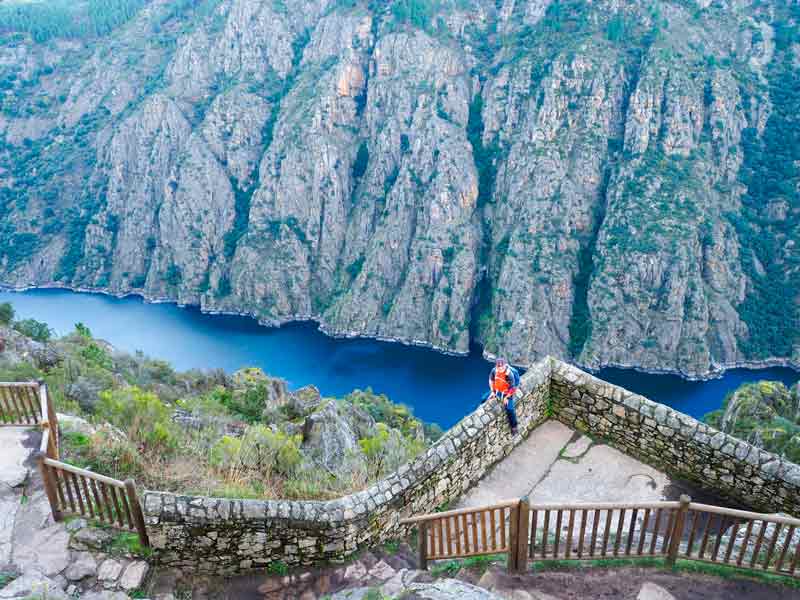
On the second day we walk alongside the River Sil, through the spectacular terraces of heroic viticulture. Passing the incredible Balcones de Madrid viewpoint, the trail leads to the Monastery of Santa Cristina de Ribas de Sil, and shortly after to the viewpoint known as A Mirada Máxica — one of those spots where the canyon opens up and, for a moment, time seems to stand still.
On the third and final hiking day, the Sil continues to set the pace, this time from above. We’ll pass the O Cotarro viewpoint, the highest in the canyon, along with the viewpoints of Cabezoá, A Columna, Vilouxe and Pé do Home, each offering some of the most breathtaking panoramas in all of Galicia. The route ends at the Monastery of Santo Estevo de Ribas de Sil, today a National Parador, where you’ll sleep among the very stones that once sheltered its monks.
Each stage is designed so the walking pace matches the rhythm of the landscape: cool mornings among chestnut and oak trees, open midday hours through vineyards, and the last hours of daylight saved for the great viewpoints, when the sun sets over the Sil canyon and the vine terraces turn gold. It’s no coincidence that many hikers describe these sunsets as the true highlight of the route — even above the monasteries themselves.
What’s included in this Camiño do Monxe Experience
This version of O Camiño do Monxe includes accommodation with private bathroom, breakfast, luggage transfer between stages (maximum 20 kg per bag), transfers according to the itinerary, a 24-hour emergency line, maps and GPS tracks for each stage, pilgrim credential and travel insurance. Prices start from €600 per person in a double room.
Who is the 5-Day Camiño do Monxe for?
O Camiño do Monxe in 5 days is designed both for experienced hikers looking for a new Galicia hiking route to complete in a short time, and for anyone tackling a multi-day route for the first time who wants to start with a shorter one. Only a moderate fitness level is required. No technical experience or previous long-distance walking is needed — just the desire to walk and let yourself be surprised by one of the most magical corners of inland Galicia.
Frequently Asked Questions about O Camiño do Monxe
How many days does the short version of O Camiño do Monxe take?
This version lasts 5 days and 4 nights, with 3 full days of hiking.
What’s the total distance of the route?
The total distance is around 60 km, split across three stages of between 19 and 21 km each.
How difficult is it?
The difficulty is moderate. No technical knowledge or previous long-distance experience is required — just a reasonable level of fitness.
Where does the route start and finish?
The route starts in Castro Caldelas and ends at the Monastery of Santo Estevo de Ribas de Sil, today a National Parador.
Can you reach the starting point by public transport?
You can take the train to Ourense and then a private transfer to Castro Caldelas.
What’s included in the price from €600?
It includes accommodation with private bathroom, breakfast, luggage transport, transfers according to the itinerary, map, credential, stage tracks and travel insurance.
Is this route suitable for someone who has never done a multi-day trail before?
Yes, it’s an ideal option for those starting out in multi-day trekking, since Rutas Meigas handles the logistics, accommodation and luggage.
What’s the best time of year for Ribeira Sacra hiking on O Camiño do Monxe?
You can hike O Camiño do Monxe all year round, though spring and autumn offer the most pleasant walking conditions. In autumn, the whole Ribeira Sacra area turns incredible colours.